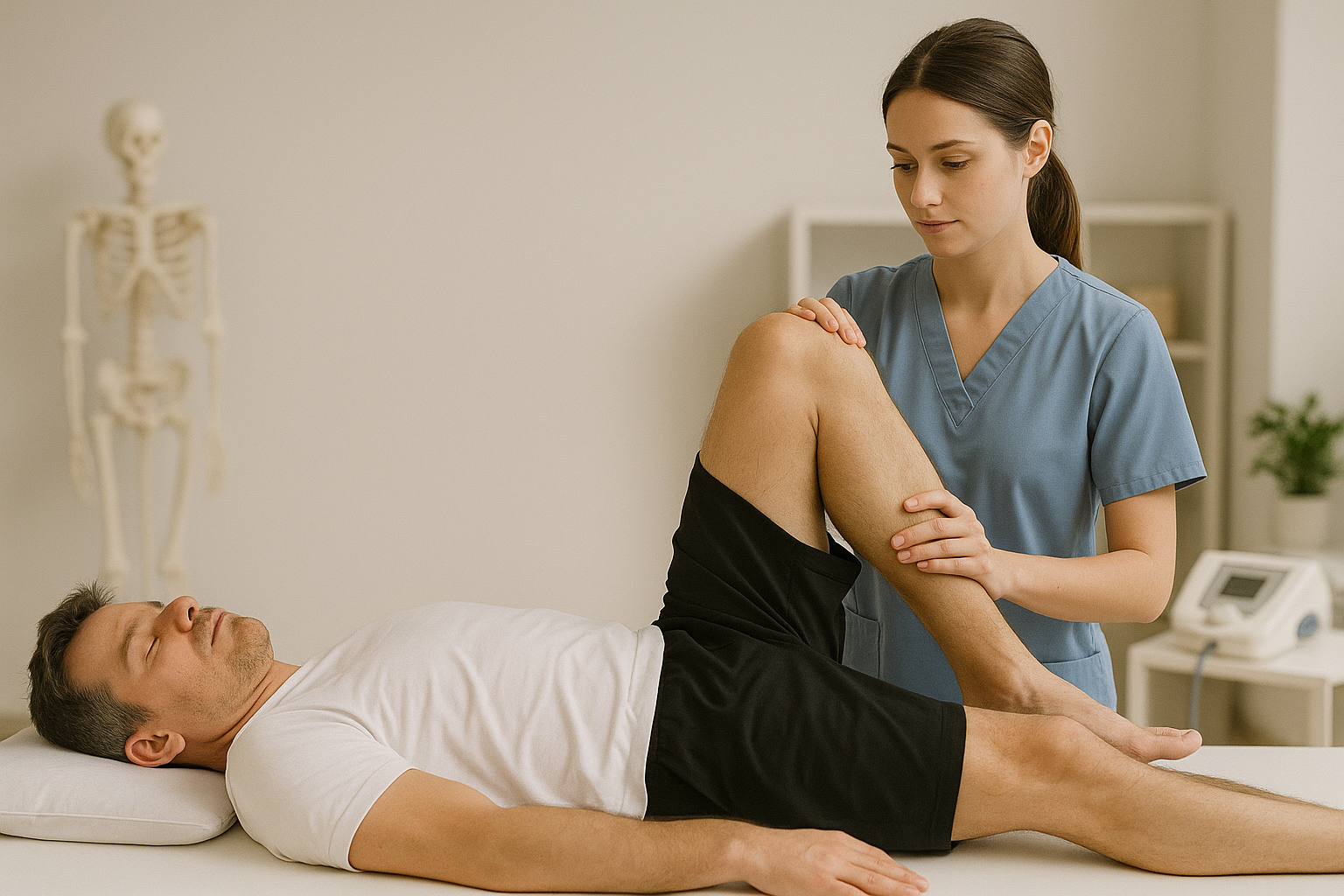
Postoperative and post-injury physiotherapy

Postoperative and post-injury physiotherapy

section-064d32a

Postoperative and post-injury physiotherapy is a specialized treatment process aimed at restoring function after surgical procedures and injuries. It helps reduce pain, rebuild strength, improve mobility, and return to full activity as quickly as possible.

Postoperative physiotherapy

It is carried out after various types of surgeries, including orthopedic (knee, hip, spine), surgical, oncological, and reconstructive procedures.

Goals of postoperative physiotherapy:

  • reducing pain and swelling,

  • protecting the operated area,

  • restoring range of motion,

  • rebuilding strength and stability,

  • preventing complications (e.g., adhesions, thrombosis, stiffness),

  • preparing the patient for full activity or return to sport.

Methods used:

  • early exercises (breathing and isometric),

  • soft tissue and scar mobilization,

  • manual therapy,

  • strengthening and stabilization exercises,

  • gradual loading of the operated limb,

  • physical therapy supporting regeneration.

Post-injury physiotherapy

It is used after injuries such as sprains, dislocations, fractures, muscle tears, overuse injuries, or contusions.

Goals of post-injury physiotherapy:

  • accelerating the regeneration of damaged tissues,

  • reducing pain and swelling,

  • restoring proper range of motion,

  • rebuilding muscle strength and stability,

  • improving coordination and motor control,

  • returning to daily activity and sport.

Methods used:

  • manual therapy,

  • kinesiotaping,

  • gradual functional exercises,

  • joint mobilizations,

  • balance and coordination training,

  • proprioceptive exercises.

Why is postoperative and post-injury physiotherapy so important?

Because it helps to:

  • regain function faster,

  • reduce pain,

  • prevent long-term movement restrictions,

  • avoid chronic problems,

  • return to full activity safely and in a controlled way.