
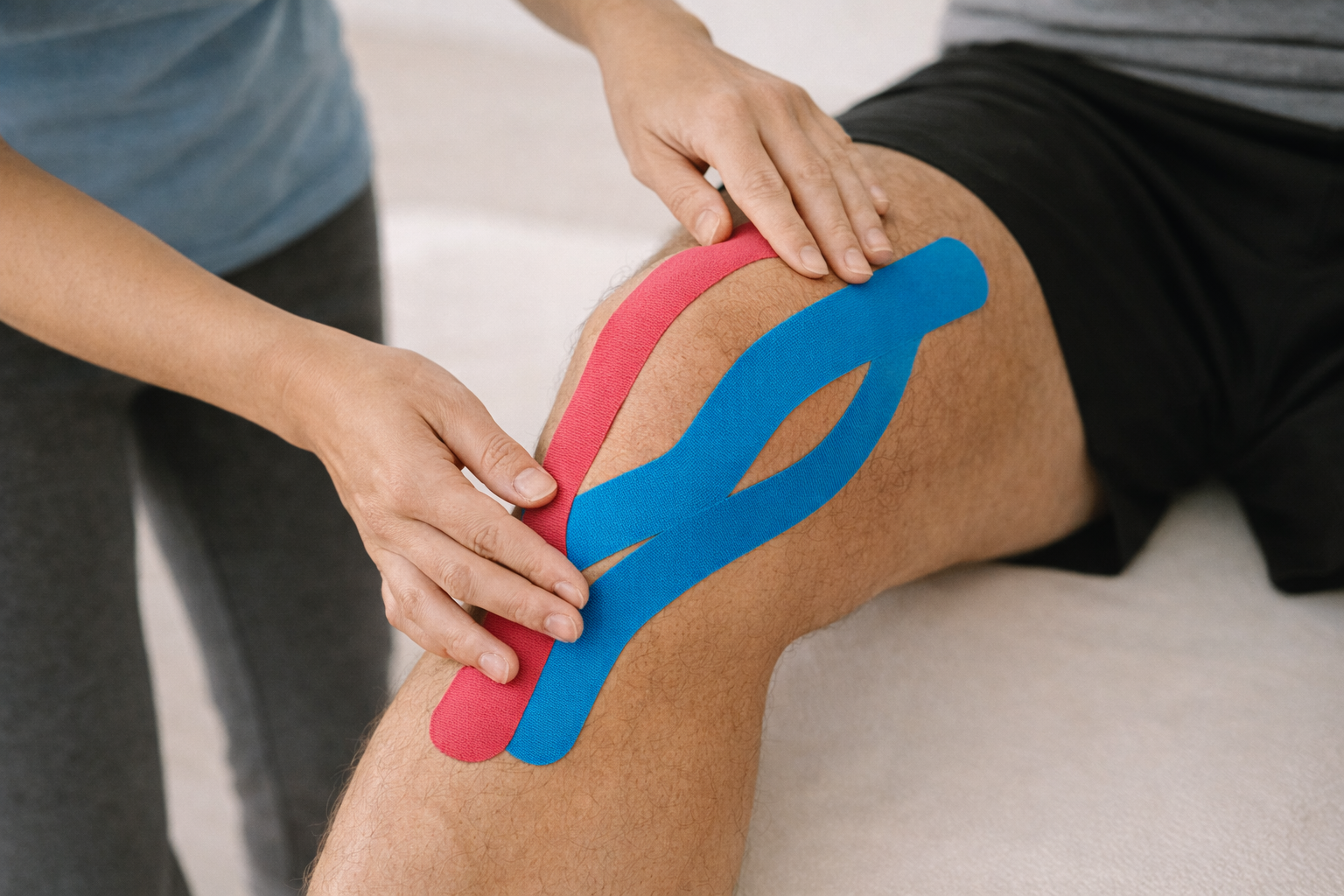
Kinesiotaping
section-064d32a
Kinesiotaping (dynamic taping) is a therapeutic method that involves applying special elastic tapes to the skin, designed to mimic the properties of human skin. The tapes do not restrict movement while supporting the functioning of muscles, joints, and the lymphatic system.
What is kinesiotaping?
Cotton tapes with heat-activated adhesive are applied to the body.
The method of application depends on the therapeutic goal—the tapes can have a relaxing, supportive, or anti-swelling effect.
How does kinesiotaping work?
- Reduces pain by relieving pressure on pain receptors.
- Decreases muscle tension—can either relax or activate muscles.
- Improves lymphatic circulation—helps remove swelling and congestion.
- Stabilizes joints without limiting mobility.
- Supports tissue regeneration after injuries and overuse.
- Corrects movement patterns and posture.
When is kinesiotaping used?
Most commonly for
- back pain
- muscle overload
- joint sprains
- lymphatic and post-injury swelling
- tendon inflammation
- sports injuries
- limited range of motion
- scar therapy (e.g., after surgeries)
Advantages of this method
- can be worn for several days (the tapes are waterproof)
- does not limit daily activities
- works 24/7 – continuously supports the treated area
- painless and safe
Effects of kinesiotaping
- pain reduction
- decreased swelling
- improved muscle stability and function
- faster return to activity after injuries
- improved mobility and posture