
Neurological and Orthopedic Rehabilitation
section-064d32a
Neurological Rehabilitation
It focuses on individuals with damage or diseases of the nervous system, including the brain, spinal cord, and peripheral nerves.
It may be needed after:
stroke,
traumatic brain injury,
spinal cord injury,
neurodegenerative diseases (e.g., Parkinson’s disease, MS),
neuropathies or nerve palsies.
Goal: to improve motor control, balance, coordination, strength, cognitive function, and independence.
Methods: neuroplasticity-based exercises, gait training, balance training, occupational therapy, speech therapy, and functional stimulation.
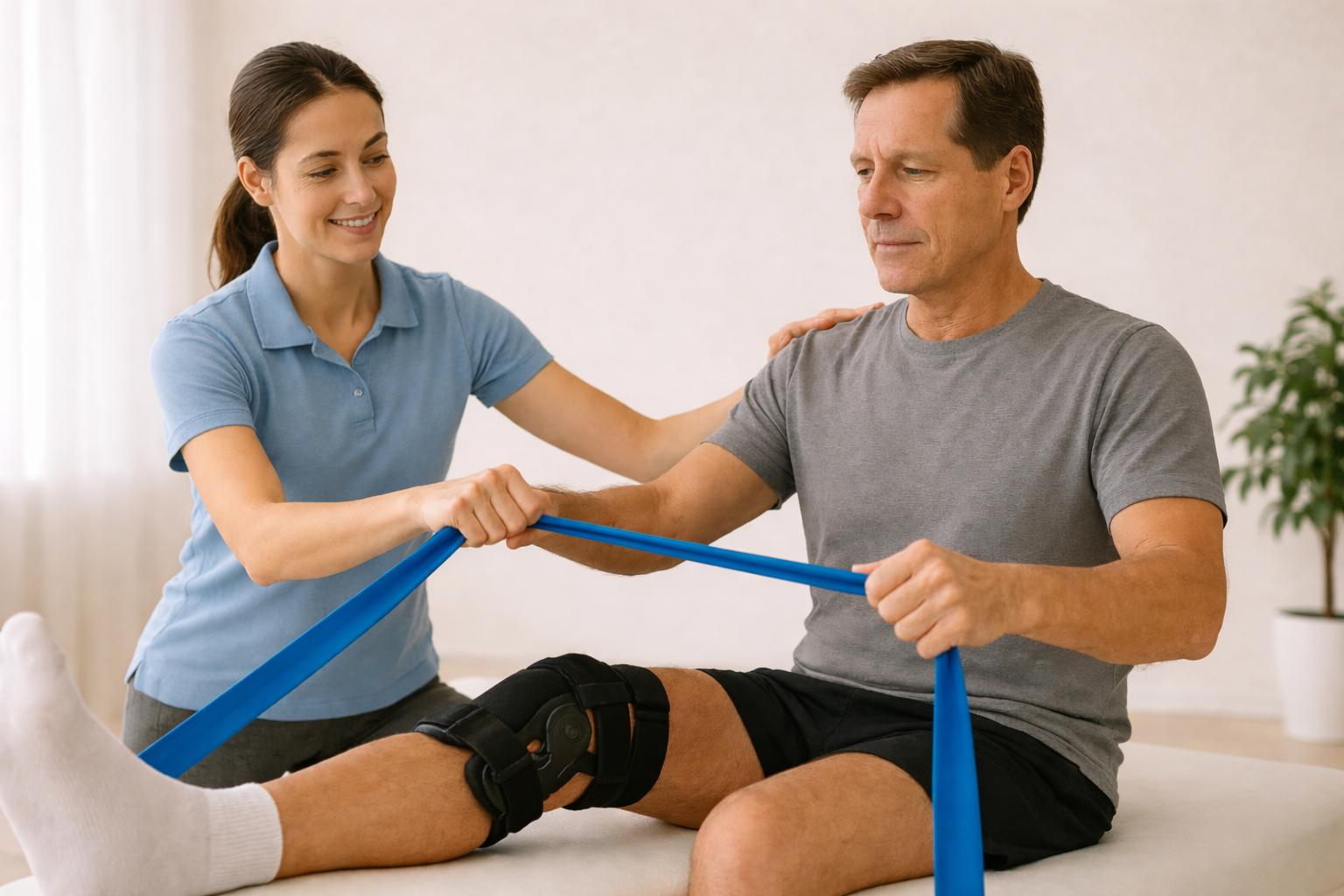
Orthopedic Rehabilitation
It focuses on patients with injuries or conditions affecting the musculoskeletal system — bones, joints, muscles, ligaments, and tendons.
Most often used after:
fractures,
orthopedic surgeries (e.g., joint replacement, ACL reconstruction),
sprains and muscle tears,
overuse injuries and spine or joint pain.
Goal: to restore range of motion, muscle strength, stability, reduce pain, and return to daily activity or sport.
Methods: strengthening exercises, joint mobilizations, stretching, manual therapy, and functional training.